
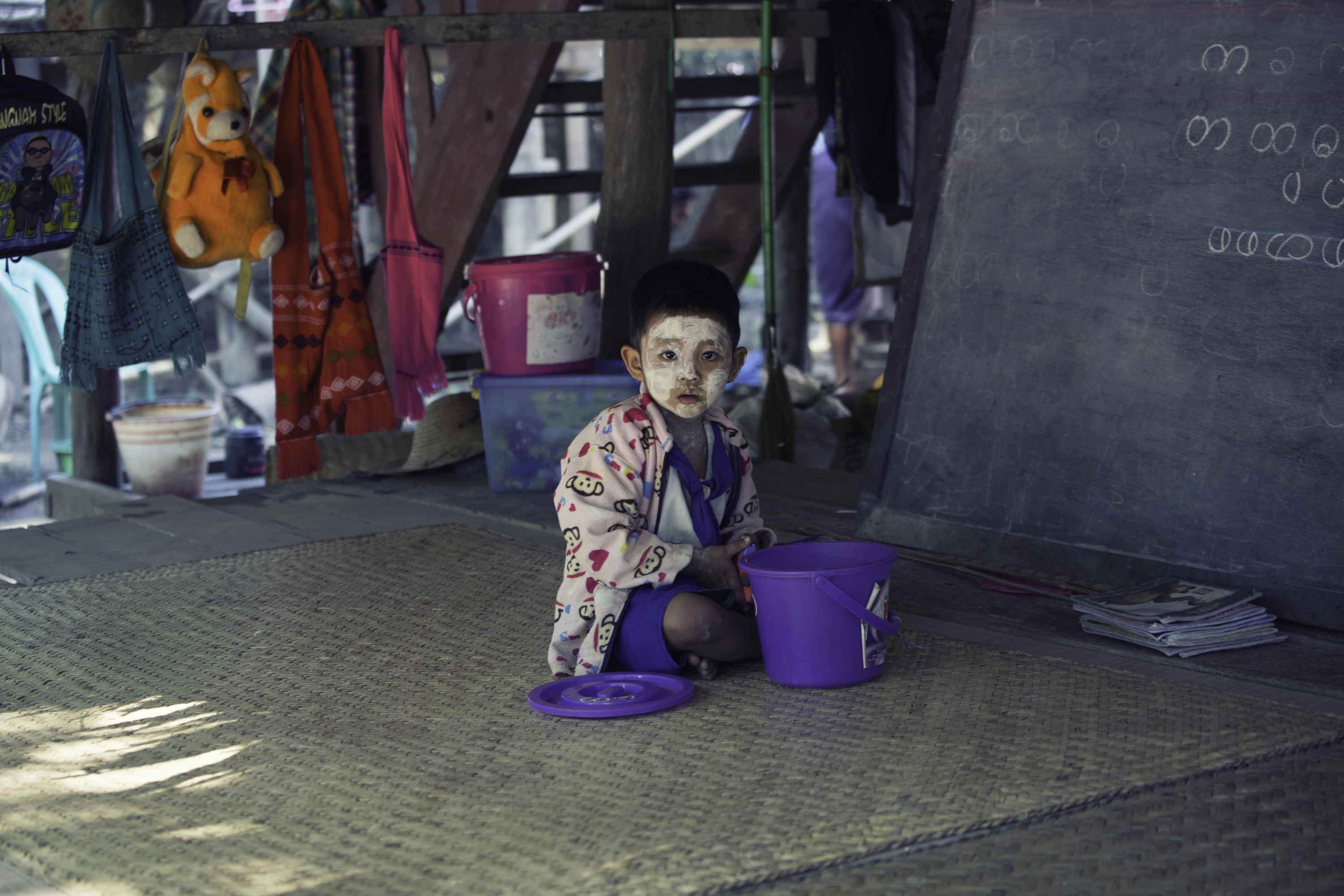
This photo was taken in Myanmar in 2016. It stayed with me, like so many of the impressions from that trip. The child, sitting so still, eyes wide and painted with thanaka, surrounded by colors, textures, and an old chalkboard behind him, speaks to a reality that is layered and deep.
What stood out for me most, though, was the writing on that board. Those rounded characters. The unique shape of the Burmese script. I remember learning during that visit that the reason for the roundness of the letters comes from something entirely practical, something rooted in adaptation. It was because people used to write on palm leaves. And straight lines, if pressed too hard, would tear the leaf. Curves were safer. More forgiving. The medium shaped the message.
That stayed with me. Because isn’t that what we do, all of us, all the time? We adapt. We curve when we need to. We find new forms, new ways to speak, new ways to be, based on the world around us. Sometimes we don’t even realize we’re doing it. But over time, a culture takes shape, a script emerges, habits form, traditions are carved, all because of the initial constraints of the environment.
And the beauty of it is that something so practical can become something so elegant, so graceful. These shapes, born of necessity, become symbols of identity.
It makes me wonder how many of the things we do today are silent echoes of old adaptations. How many invisible threads tie us back to a time when we were just trying to make things work. Just like this child, sitting in a classroom in a stilt house, adapting to a world he is growing into.
And we are still adapting, all of us. Every day. In ways seen and unseen.
Adaptation is not just about survival. It is also about the quiet, creative force that shapes who we become.
One response to “The Shape of Adaptation~”
Many, many things we do, come from very old traditions. Passed on and on… through centuries and centuries…