
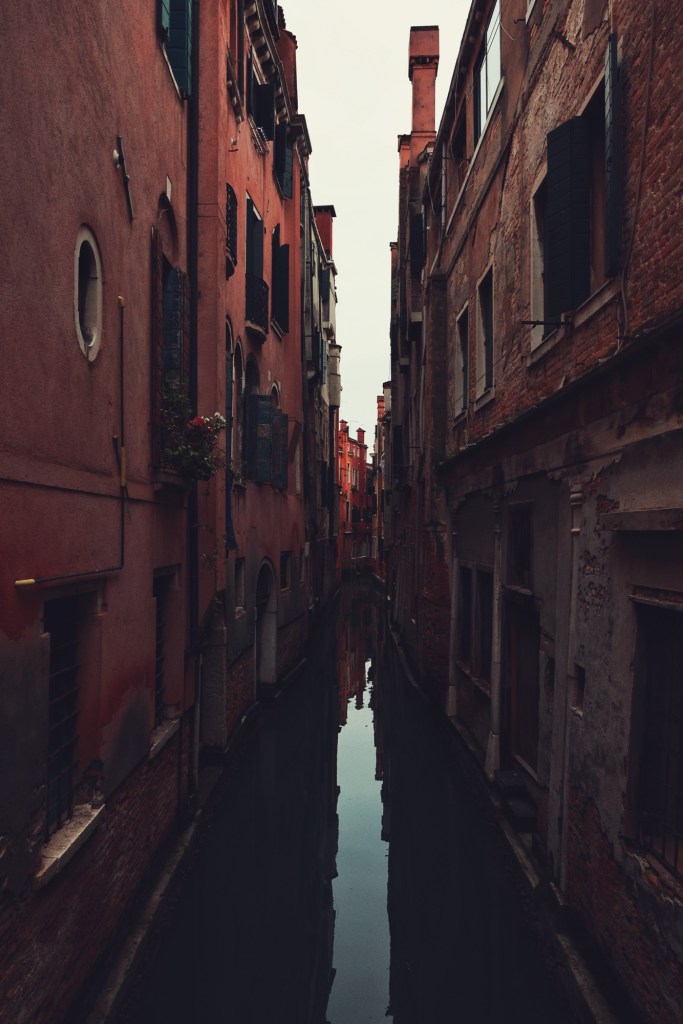
There’s something surreal about arriving in Venice. The moment you step onto its stone pathways, surrounded by canals instead of streets, you know you’ve entered a place that defies the ordinary. No cars, only boats and gondolas gliding across the water, bridges connecting impossibly winding alleys, and buildings that lean into one another like old friends whispering secrets. It is ancient, historic, and impossibly beautiful—yet it is also crumbling, unpredictable, and full of contradictions.
Venice doesn’t just invite you in; it pulls you under its spell. The reflections of faded facades ripple in the canals, distorted and imperfect, much like time itself here. Nothing is straight. Nothing is stable. Yet, somehow, everything belongs exactly as it is. The city is a living museum, a masterpiece in decay, where layers of history, tradition, and art exist in an effortless, chaotic harmony. It isn’t just about what you see, but what you feel—Venice breathes, and if you listen closely, you can hear its sighs in the lapping of the water against ancient walls.
I met a local today. He asked me what I thought of Venice. Beautiful, I answered. He smiled, shaking his head slightly, and said, It is peculiar and special. And in that moment, I understood. Venice isn’t just beautiful in the way postcards show it. It is both authentic and unreal, magnetic yet indifferent, welcoming yet elusive. It is a city that refuses to be defined by its visitors, yet no one leaves untouched.
As I wander through its narrow passages, crossing bridges that lead nowhere expected, I find myself wondering—how much of Venice is real, and how much is simply an illusion we choose to believe? Perhaps that is its magic. Venice does not try to impress, yet it captivates. It does not chase modernity, yet it remains timeless. And maybe that’s why we all return, drawn to its peculiar and special rhythm, trying to capture something we know will forever slip just out of reach.